A new kind of public place
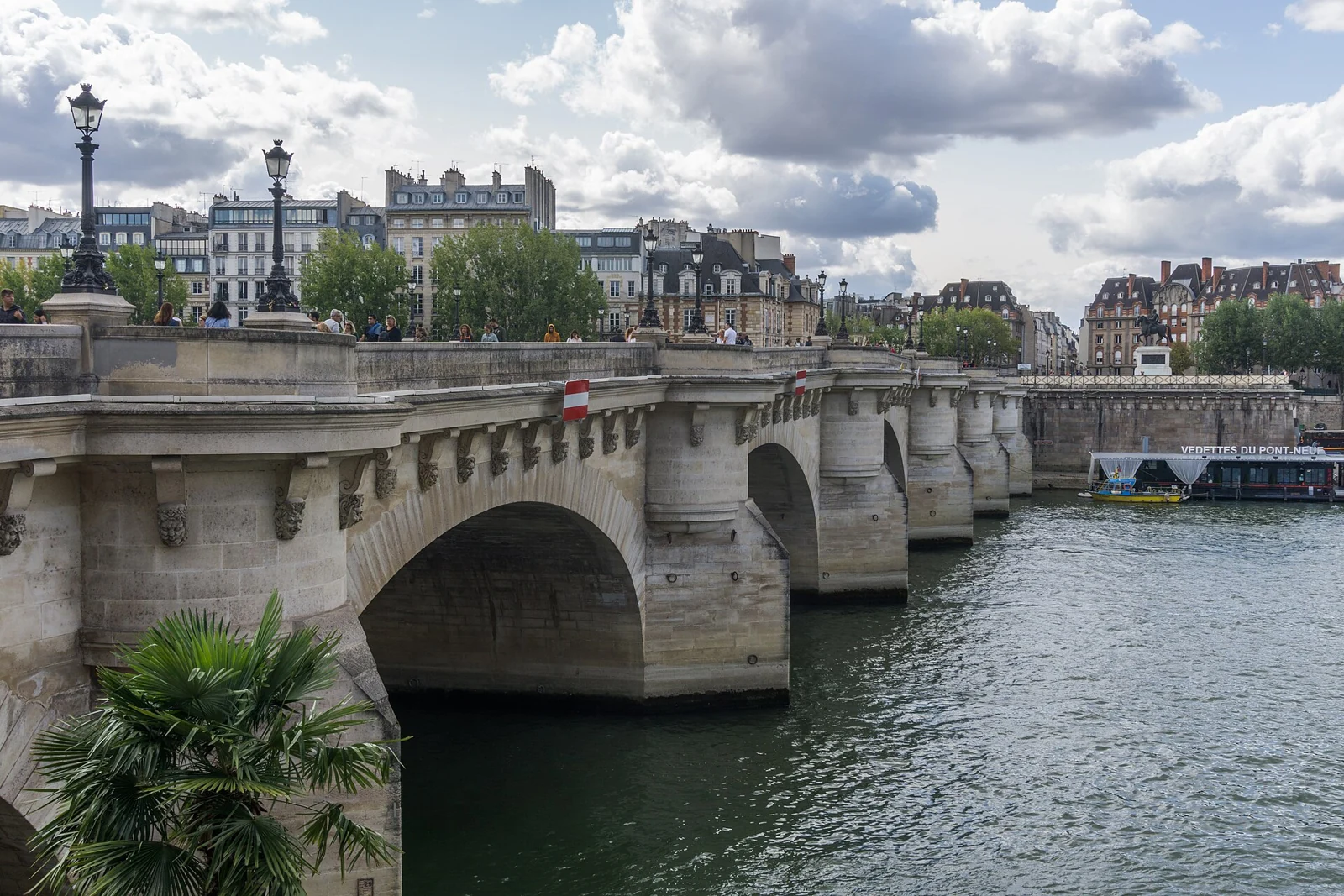
Pont Neuf is best approached as a place to pause. Its broad pavements, stone arches and position beside the western tip of the Île de la Cité make the river unusually legible. Stand near the central island and notice that the bridge has two parts: one reaches the Right Bank, the other the Left. The pointed garden below occupies a different level from the roadway.
The name means New Bridge. It survives from a moment when this crossing was a striking addition to the city, rather than describing its age today. It is now Paris's oldest surviving bridge, but neither the city's first crossing nor its first bridge made of stone.
From Henri III to Henri IV
Henri III laid the foundation stone in 1578; the inauguration followed under Henri IV in 1607. That long interval matters: the bridge belongs to a period of upheaval and rebuilding, not a single royal gesture completed overnight. Its open character distinguished it from crossings burdened with houses and shops.
Those unobstructed views changed the social possibilities of a bridge. A crossing could also be a place to linger and encounter the city. This is the historical idea to carry into your visit: the Seine became visible as a shared urban setting, rather than only a route for goods or an obstacle to cross.
Look above and below the parapet
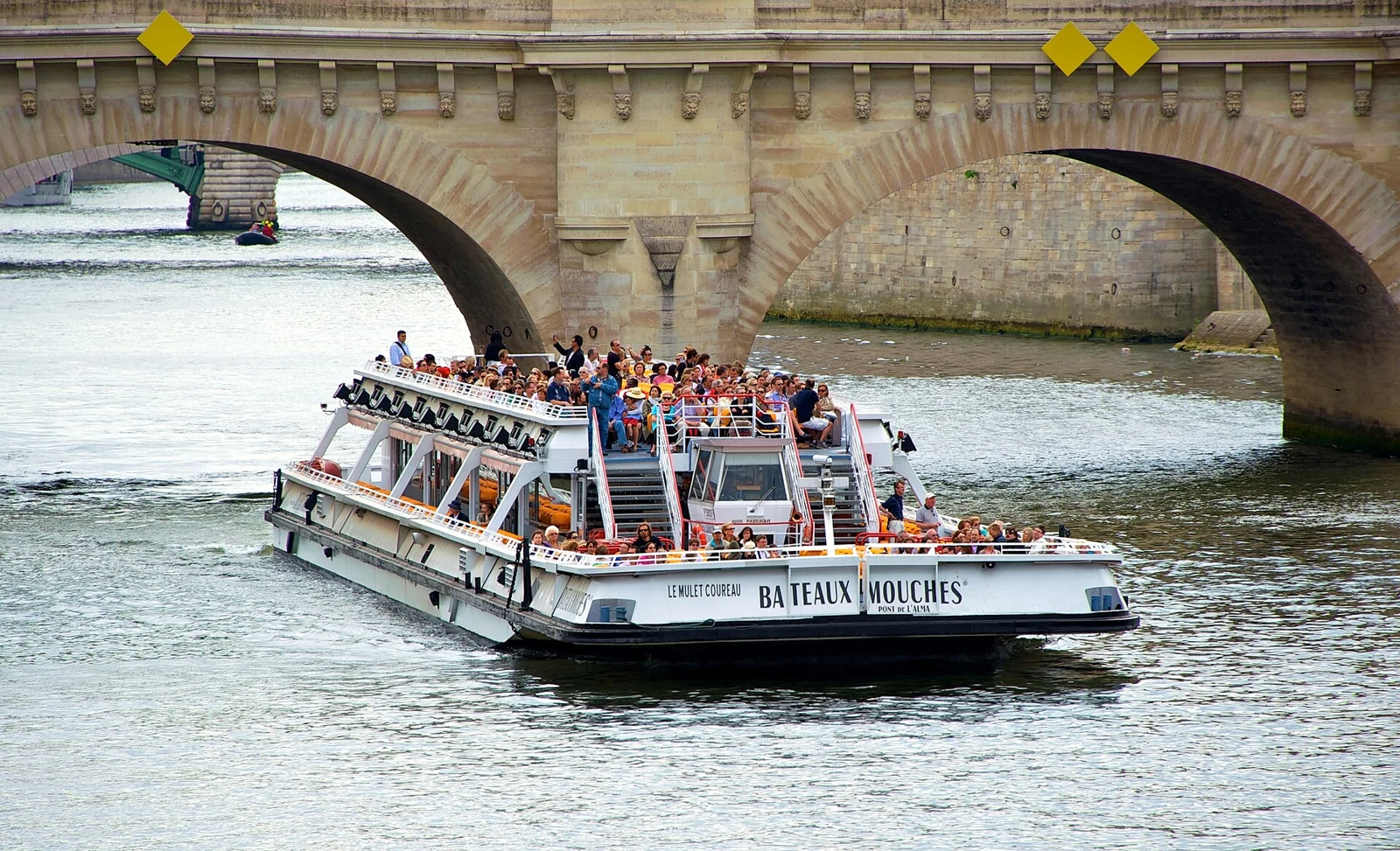
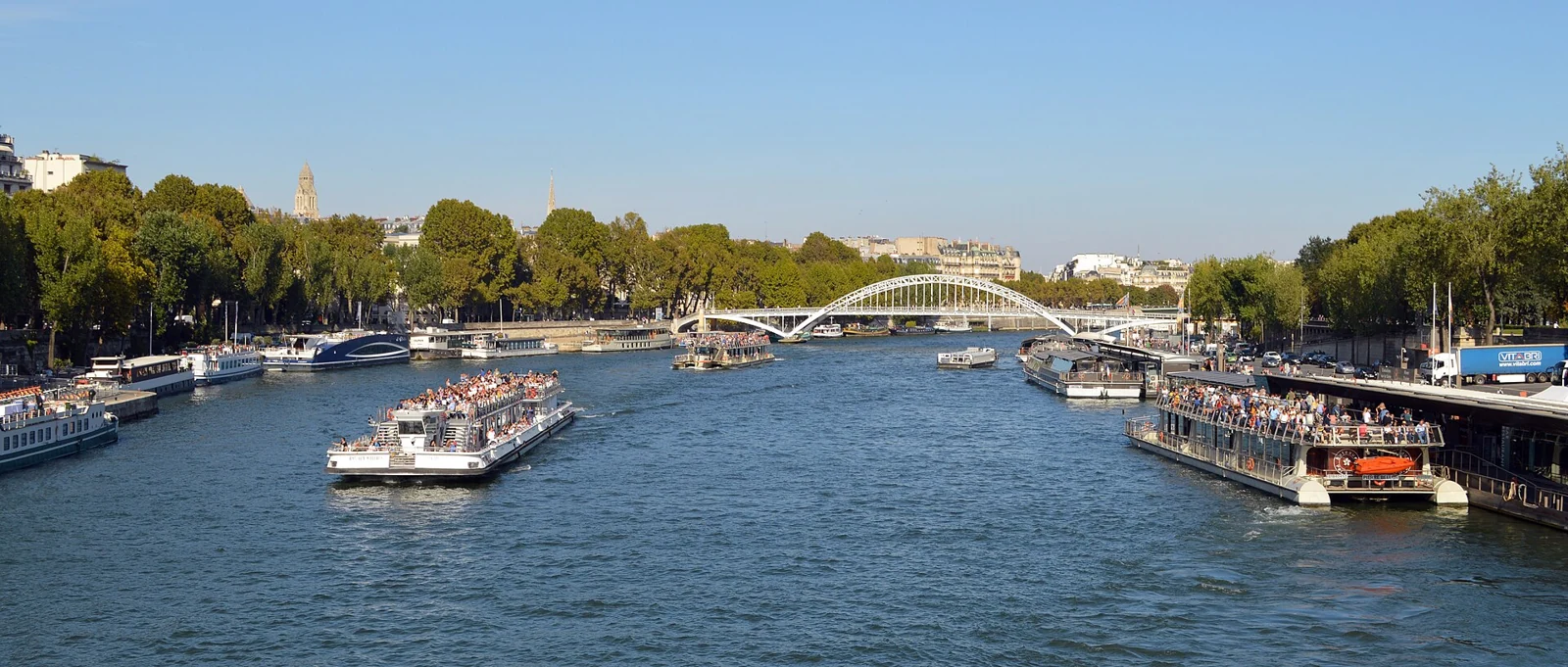
The semicircular arches establish a different rhythm from the slender metal bridges downstream. Look for the sculpted faces beneath the cornice, then move to a safe viewpoint on the bank to see how the piers meet the water. A passing boat helps reveal the scale that is difficult to appreciate from the pavement.
The equestrian statue of Henri IV anchors the central space. Use it as a meeting landmark, but be precise when arranging a cruise rendezvous: the statue, the pavement and the embarkation area below are not the same place. The garden and lower quay can also have separate access conditions.
A bridge that keeps entering culture
Pont Neuf has remained open to reinterpretation. Christo and Jeanne-Claude temporarily wrapped it in 1985, making familiar outlines newly noticeable. Leos Carax's 1991 film Les Amants du Pont-Neuf gave the crossing another life in cinematic imagination. These are different ways of seeing the bridge, not substitutes for its physical history.
Try your own modest comparison: first observe the architecture from the bridge, then from the opposite bank. The island changes from a street destination into a shape dividing the current. That shift is more revealing than trying to reproduce a single celebrated photograph.
Make an island walk around it
Begin at the Louvre side, cross to the island and explore the quieter streets around Place Dauphine. Continue towards the cathedral only if you have enough time and energy; this need not become a complete circuit of central Paris. Return by another crossing to understand the two banks as connected neighbourhoods.
Keep a street-level alternative to the low quays. Steps, high water and temporary works can change access, particularly around the wider Notre-Dame area. A museum admission or cathedral visit needs its own reservation arrangements where applicable; walking across the public bridge does not.
Pair the walk with the right departure
Vedettes du Pont Neuf identifies its embarkation at Square du Vert-Galant, making an island walk a sensible partner for that departure area. When comparing GetYourGuide cruises, check the named operator and exact meeting point rather than assuming that every central-Paris boat leaves here.
Allow time to descend, find the boarding queue and follow check-in instructions. If your chosen cruise departs near the Eiffel Tower or Pont de l'Alma, treat that as a separate transfer. A relaxed bridge visit followed by a correctly located sailing is more rewarding than racing between two unrelated bookings.
Your questions, answered
Why is Paris’s oldest bridge called Pont Neuf?
It was the new bridge when built. Its foundation dates to 1578 and its inauguration to 1607; the name remained.
Does it cross the whole Seine?
Its two sections connect both banks through the western end of Île de la Cité.
Do all Seine cruises leave from Pont Neuf?
No. A particular operator embarks near Square du Vert-Galant; other cruises use different piers. Follow your booking confirmation.
Sources & editorial notes
The guide draws on city, museum, heritage, transport and operator information. Practical recommendations are our editorial judgement; follow the current official notice for date-specific access.
Some links are affiliate links. We may earn a commission if you book through them, at no additional cost to you. Prices, availability and booking terms are set by the provider.