Before the postcard
Paris grew at an important river crossing, but its ancient history is more complex than a single origin story on one island. The Roman city of Lutetia developed on the Left Bank as well as around the river. What matters for a visitor today is the durable pattern: crossings attracted movement, movement encouraged exchange, and control of that exchange mattered politically.
The Seine brought provisions and building materials into a growing city. Its banks were places of work, washing, unloading and exchange. Imagining the old river as an empty romantic promenade misses the noise and labour that made Paris possible. The boat on the city's coat of arms recalls that powerful relationship with river commerce.
A city of inhabited crossings
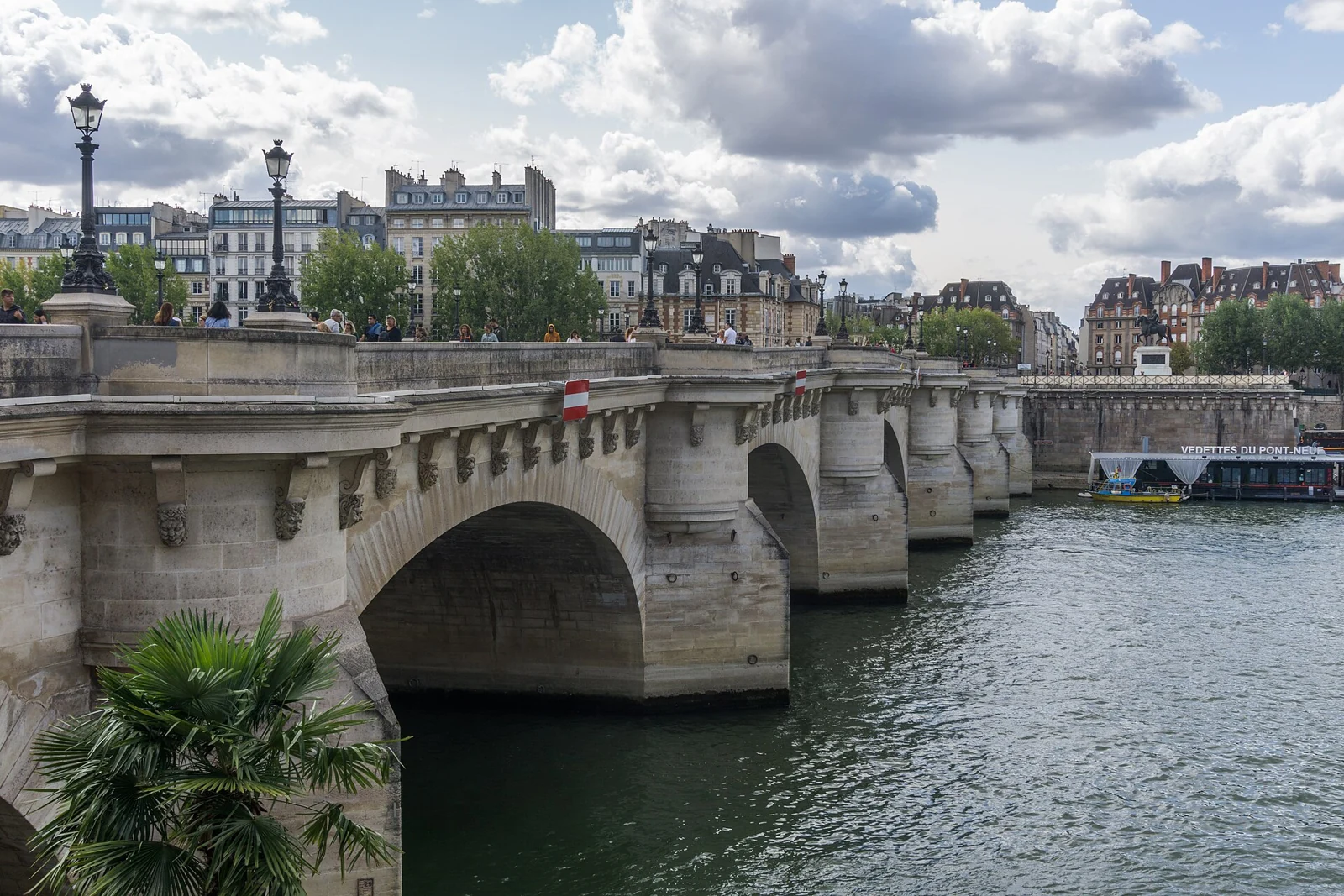
Earlier Paris bridges could carry buildings as well as traffic. Shops and houses made crossings extensions of the city, with all the congestion and fire risk that implies. The Pont Neuf broke conspicuously with that model: its open views and generous pedestrian space helped establish the bridge as a place to watch the river and encounter other Parisians.
Its name means New Bridge, yet it is now the oldest surviving bridge in Paris. Construction began in the late sixteenth century and completion came in 1607 under Henri IV. Stand near the western tip of the Île de la Cité to understand its two-part crossing and its role in opening the river to public view.
Kings, revolutions and the modern capital
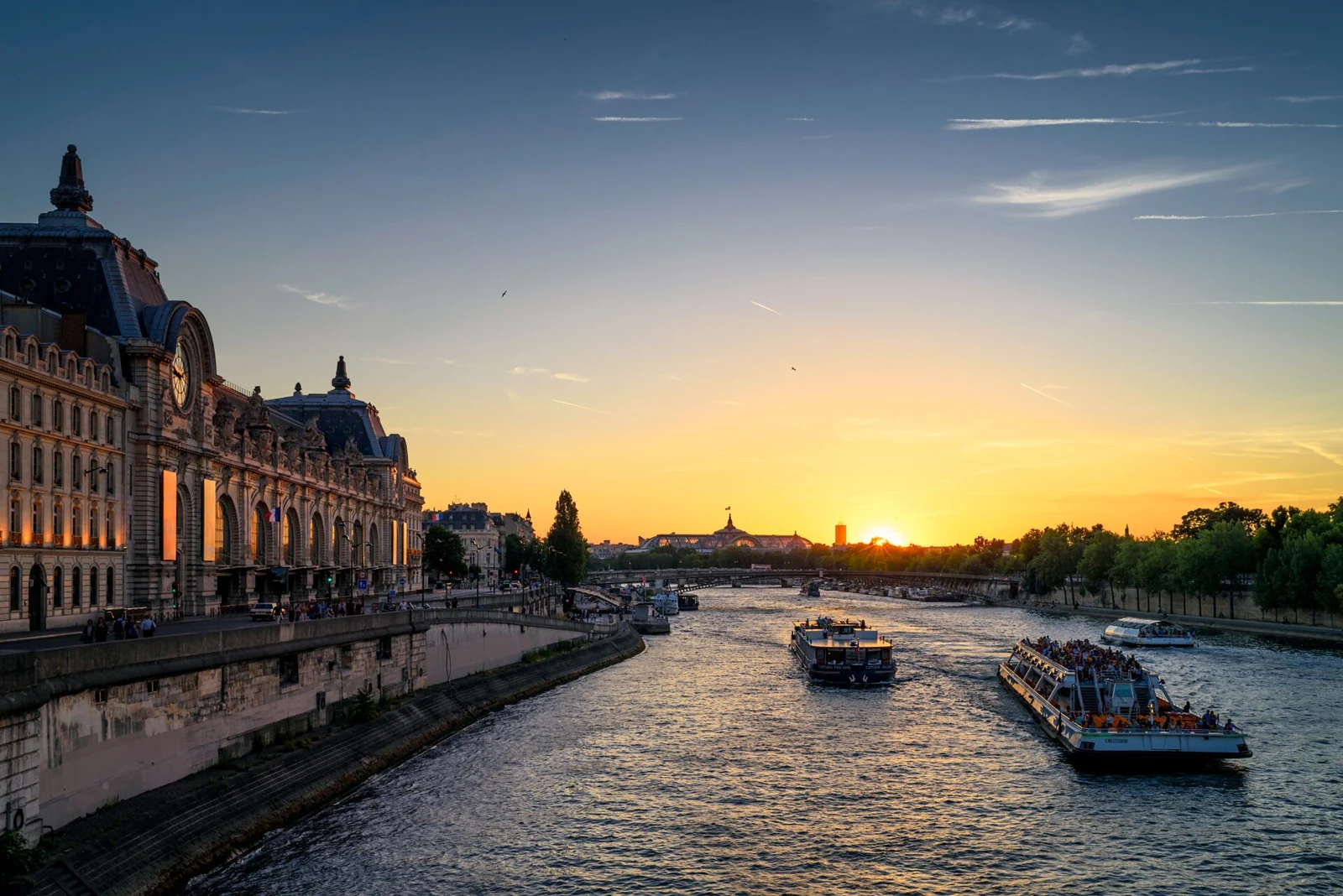
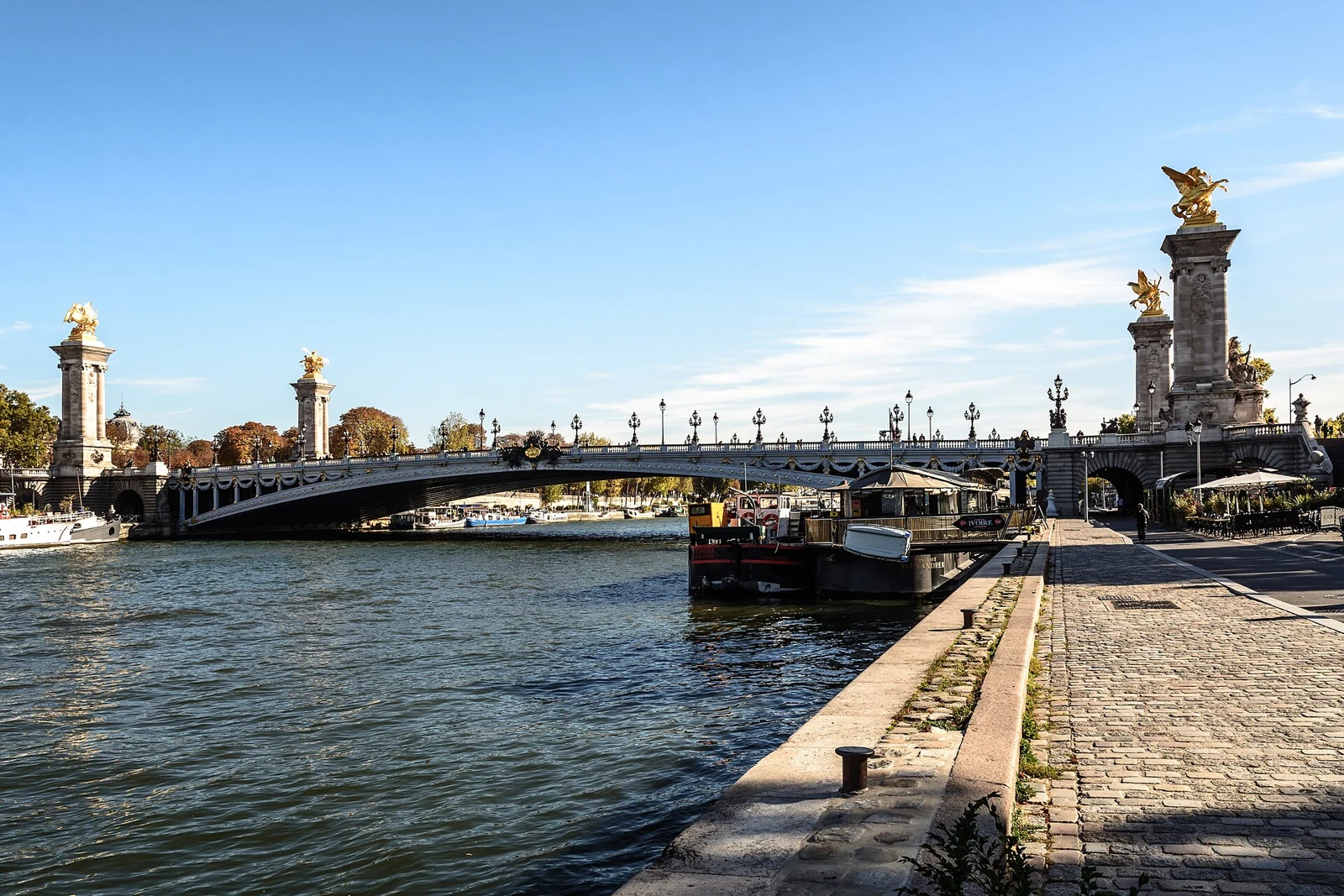
The Louvre, the Tuileries area, the Institut de France and the monumental river crossings show how successive governments used the Seine as a stage. Axes, façades and bridges created relationships across the water. Later rebuilding and new materials changed how the river could be crossed, while international exhibitions left conspicuous landmarks such as the Eiffel Tower and Pont Alexandre III.
A bridge's current appearance does not always match the date of its first crossing. Several were rebuilt, widened or renamed. Our individual bridge guides distinguish an older site from the structure visible today. This is especially useful when a guidebook compresses centuries of change into one founding date.
Floods and a changing working river
The flood of 1910 remains a major reference in the city's memory. Flood markers and the much-watched Zouave statue at Pont de l'Alma make the river's changing level visible, although the statue is not a substitute for an official warning. Flood risk has shaped engineering, transport and the protection of collections as well as daily life.
Road traffic later occupied substantial stretches of the banks. The subsequent return of parts of the quays to pedestrians and cyclists changed the experience again. Today's riverside walk is therefore not a timeless surviving scene: it is one stage in a long negotiation between transport, commerce, leisure and public space.
A living heritage landscape
UNESCO inscribed the Banks of the Seine in Paris in 1991. The protected landscape brings together the river, its bridges and the monumental ensembles that express the city's development. A UNESCO inscription does not mean that every kilometre of the entire Seine is included, nor that every building is open to visitors.
Walk from the islands towards the Louvre and onward to the exhibition-era bridges, allowing pauses rather than chasing a checklist. A cruise gives the wider composition; an island walk supplies the details hidden from the water. Pairing the two is one of the most rewarding ways to read Paris historically.
Your questions, answered
Is Pont Neuf really the oldest bridge?
It is the oldest surviving bridge in Paris. Its name dates from when it was the new crossing; completion was in 1607.
Is the entire Seine a UNESCO site?
No. The Paris inscription covers a defined historic riverbank landscape, not the river from source to sea.
Can I visit the history without buying tickets?
Yes. Bridges and public quays offer an extensive outdoor introduction; museums and cruises add interpretation and different viewpoints.
Sources & editorial notes
The guide draws on city, museum, heritage, transport and operator information. Practical recommendations are our editorial judgement; follow the current official notice for date-specific access.
Some links are affiliate links. We may earn a commission if you book through them, at no additional cost to you. Prices, availability and booking terms are set by the provider.