Visit for a different rhythm
Pont Mirabeau rewards a deliberate detour rather than a hurried addition to a first-day checklist. In western Paris, between the Auteuil and Javel sides of the river, it offers a quieter subject than the familiar postcard bridges around the Louvre. The interest lies in the relationship between a real crossing, the moving water and the poem that made its name widely known.
Arrive with a little time to stand on each bank. The bridge has traffic and a daily function; its literary associations have not turned it into a secluded garden. That mixture is part of its appeal: an ordinary urban movement can carry an unusually strong imaginative connection.
Read the bridge in Apollinaire's poem
Guillaume Apollinaire's Le Pont Mirabeau appeared in the early twentieth century and became part of Alcools in 1913. Flowing water provides a way to think about passing time, memory and lost love. Reading the poem before visiting gives the crossing an emotional scale that no list of dimensions can supply.
You need not hunt for a definitive place where every line was conceived. Instead, compare the permanence suggested by the bridge with the current moving beneath it. The encounter belongs to you; the article's interpretation is an invitation to look, not a claim that all readers must understand the poem identically.
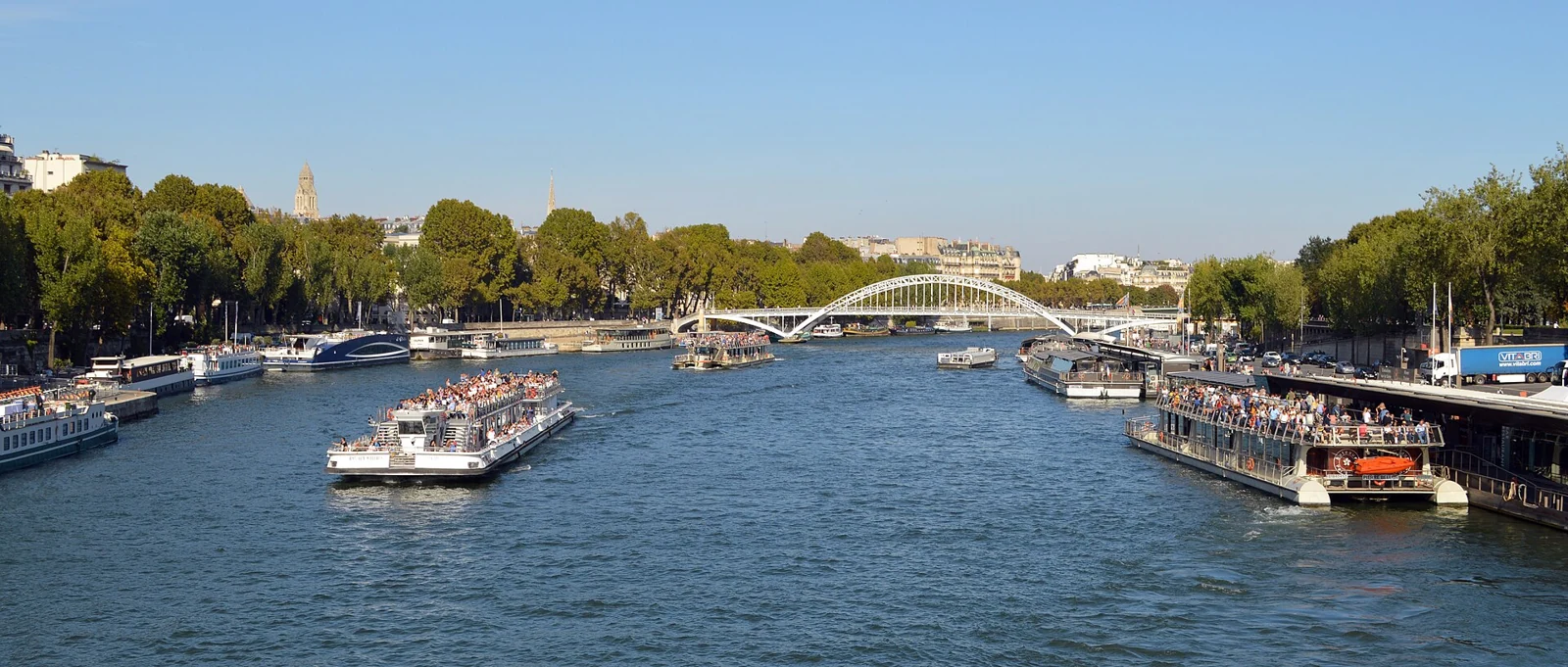
Metal shaped into a shallow crossing
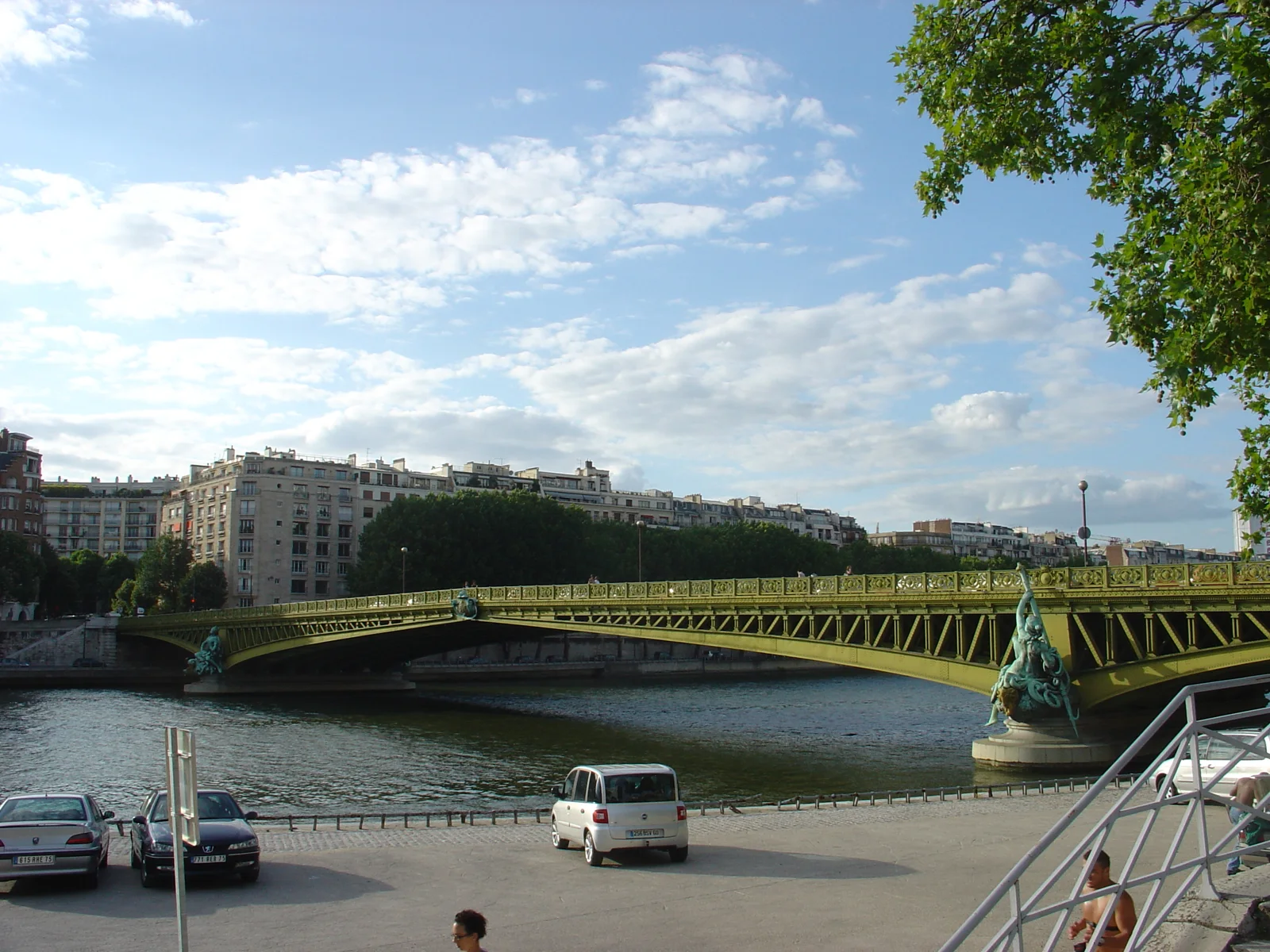
The visible bridge belongs to the 1890s, with completion recorded in 1897. Its metal structure uses a broad central opening and smaller side spans. The low line is a useful contrast with the heavier visual rhythm of several older stone bridges upstream.
From the pavement, much of that engineering can disappear beneath your feet. A bank-side view makes the arc and its supports easier to read. Watch how the structure accommodates the river rather than treating the water as an empty gap. Avoid exact technical measurements if you only want a satisfying visit: the overall form is the more important observation.
Four figures above the water
Jean-Antoine Injalbert's bronze figures give the crossing another layer of meaning. The allegories connect Paris with commerce, navigation and abundance, bringing the work and prosperity of the river into the decoration. Their relationship with the boat-like forms around the piers rewards a closer look from a safe viewpoint.
Let these details broaden the literary story. The Seine is not only a metaphor for private emotion; it is also a route of exchange and labour. Seeing the sculpture after thinking about the poem makes the bridge a meeting of two ideas about water, rather than simply a place to recite a famous line.
Build a modest western-Paris walk
One option is to combine the bridge with the Javel riverfront, keeping the outing local. Another is to continue upstream towards Grenelle and the Île aux Cygnes district. Treat that second choice as a longer walk with its own energy and access demands, not an automatic extension after an exhausting museum day.
Choose a bank based on where you want to finish, and check the current public route. Lower quays, steps and crossings can make the practical distance feel greater than a straight line on a map. For a short literary visit, crossing the bridge and observing it from one bank can be entirely enough.
Be selective about the cruise pairing
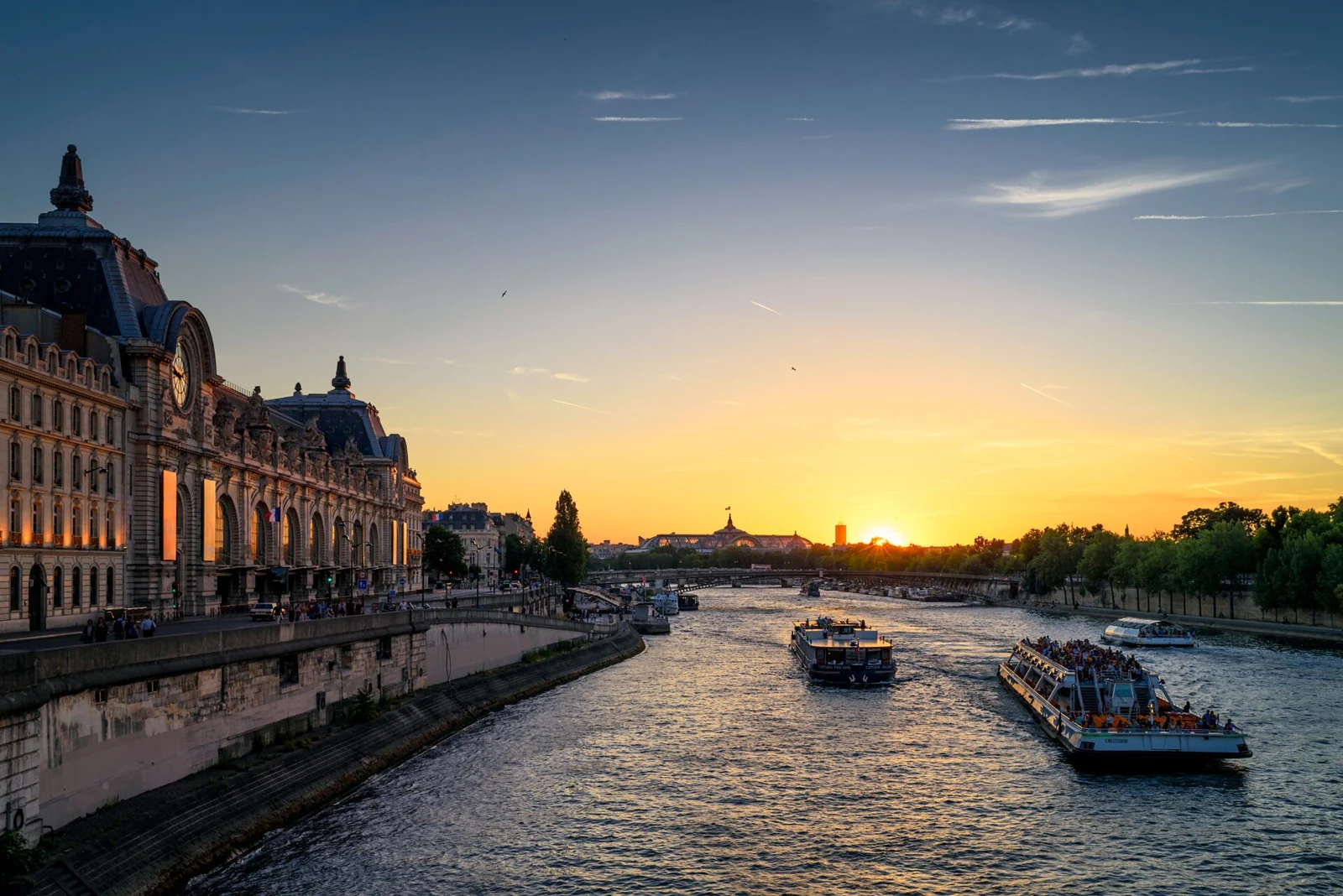
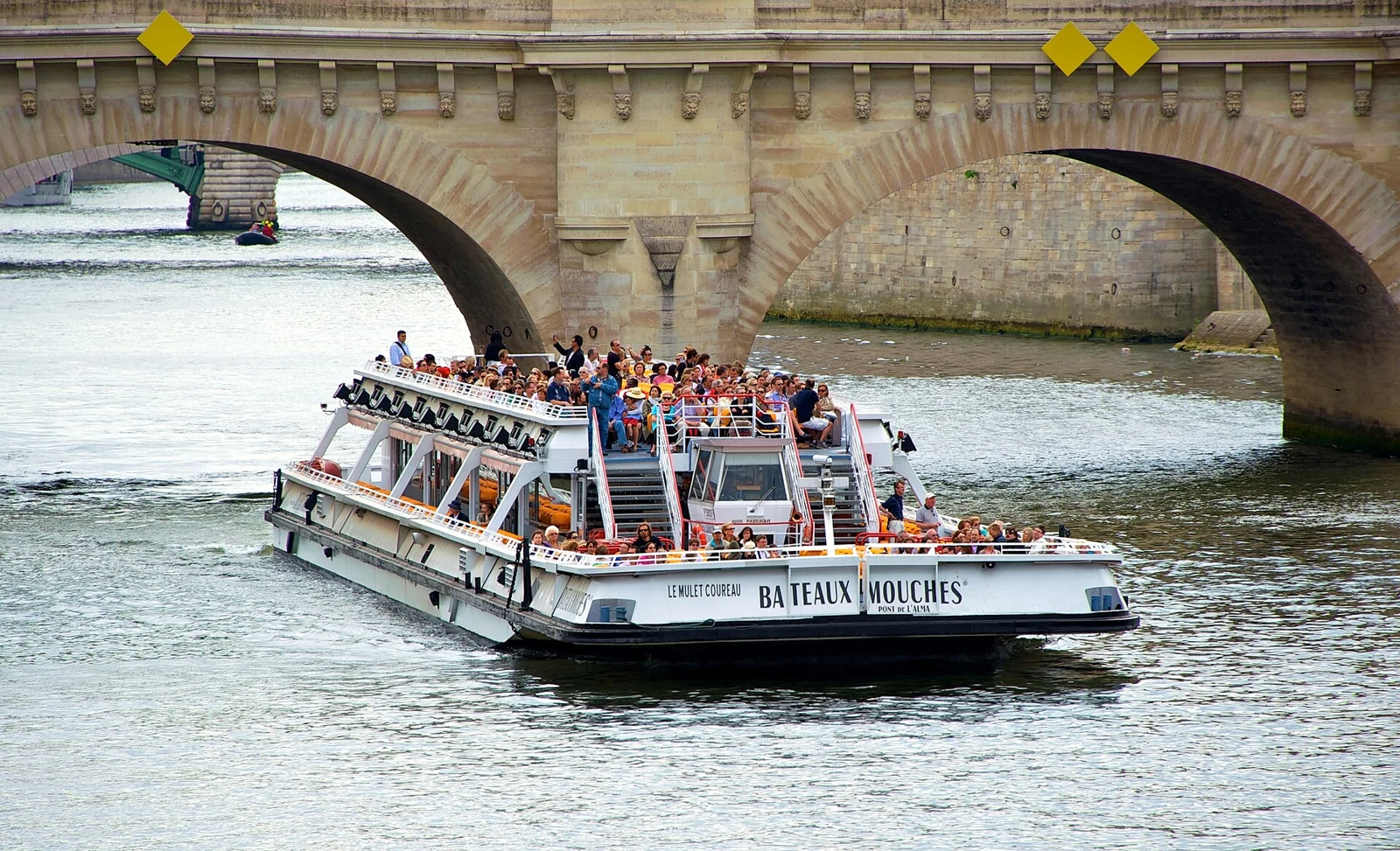
Many central sightseeing cruises focus on the better-known monument corridor, and you should not assume that they include Pont Mirabeau. If this specific bridge is essential, confirm the current route with the operator before purchase. A generic “Seine River cruise” label is not evidence that it reaches every part of Paris.
You can still pair a Mirabeau walk with a separate cruise later in the day. Compare GetYourGuide departures by the actual pier and transfer involved, or choose another day for the boat. Keeping the two experiences unhurried preserves their different strengths: close literary attention here, and a broader riverfront panorama from the water.
Your questions, answered
Why is Pont Mirabeau famous in literature?
Apollinaire’s poem uses the river beneath the bridge to explore time, memory and love. It appears in his 1913 collection Alcools.
Is it on every Paris sightseeing cruise route?
No. Confirm the advertised route with the operator if seeing this particular bridge from the water matters to you.
Is the bridge worth a first-visit detour?
It is especially rewarding for poetry, sculpture and quieter western-Paris exploration. A short visit may fit better than a long extension to an already full itinerary.
Sources & editorial notes
The guide draws on city, museum, heritage, transport and operator information. Practical recommendations are our editorial judgement; follow the current official notice for date-specific access.
Some links are affiliate links. We may earn a commission if you book through them, at no additional cost to you. Prices, availability and booking terms are set by the provider.