Watch the bridge move
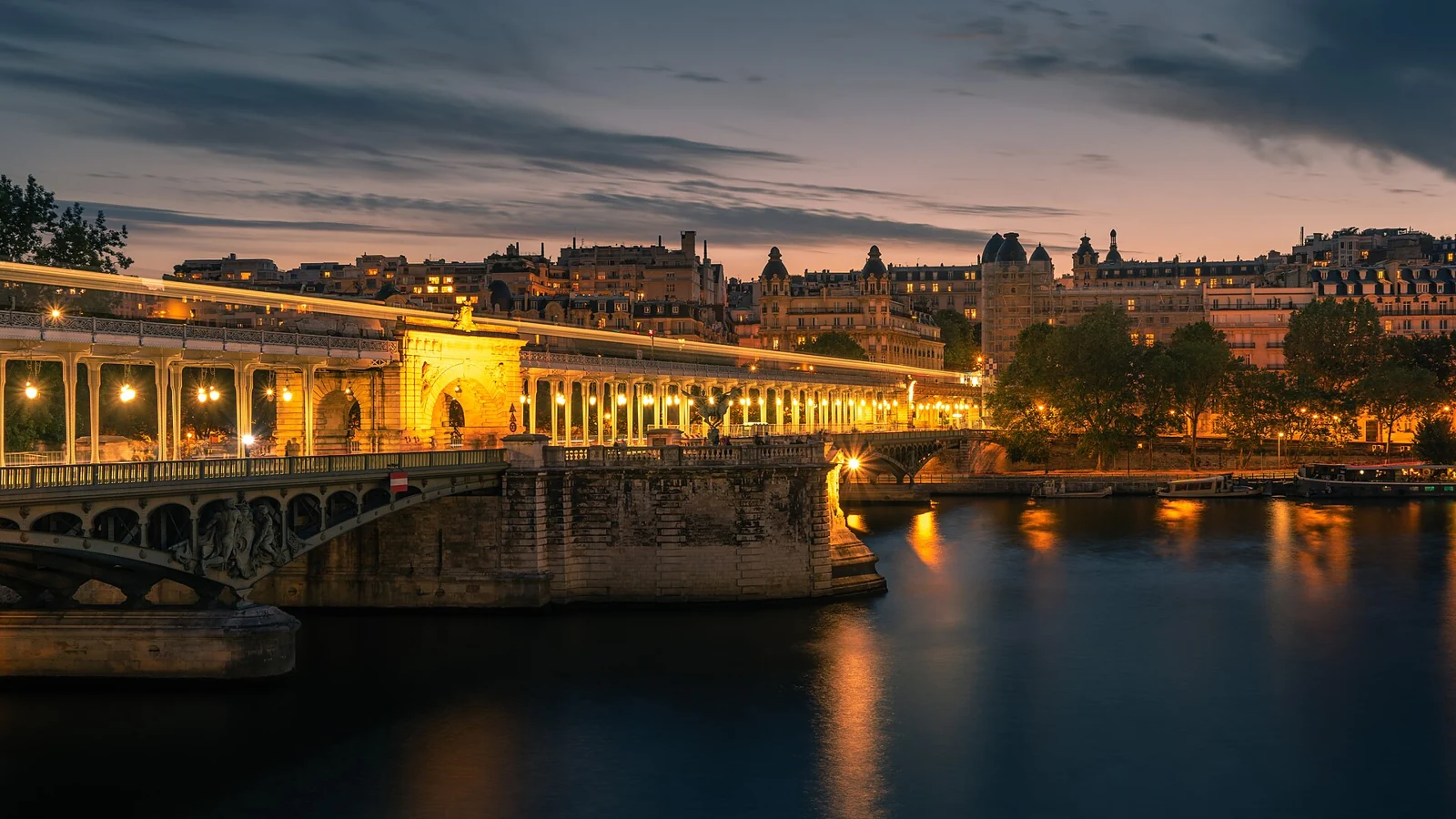
Bir-Hakeim announces itself through movement. A train passes above while the river, road traffic, cyclists and walkers each follow their own route below. The repeated columns create a strong perspective, but the bridge is more than a photogenic tunnel: it is a compact demonstration of how Paris fits different transport systems around the Seine.
Approach with enough time to observe that rhythm. A few minutes spent watching a Métro train cross can be more memorable than a hurried photograph. Stay clear of cycle routes and moving traffic, particularly when looking through a camera or turning to find the Eiffel Tower.
From Passy to Bir-Hakeim
A pedestrian crossing was established here for the 1878 exhibition. The early twentieth-century replacement combined road and railway functions, answering a different city's need for rapid transport. The present bridge took shape in the 1903–1906 period; its upper deck carries Métro line 6.
It was formerly associated with the name Passy and was renamed Bir-Hakeim in 1949 to commemorate the 1942 battle involving Free French forces in Libya. The name is therefore a memorial added to an earlier structure. Understanding those layers gives the bridge a history beyond its frequent appearances in photographs and film.
Two river arms and one island
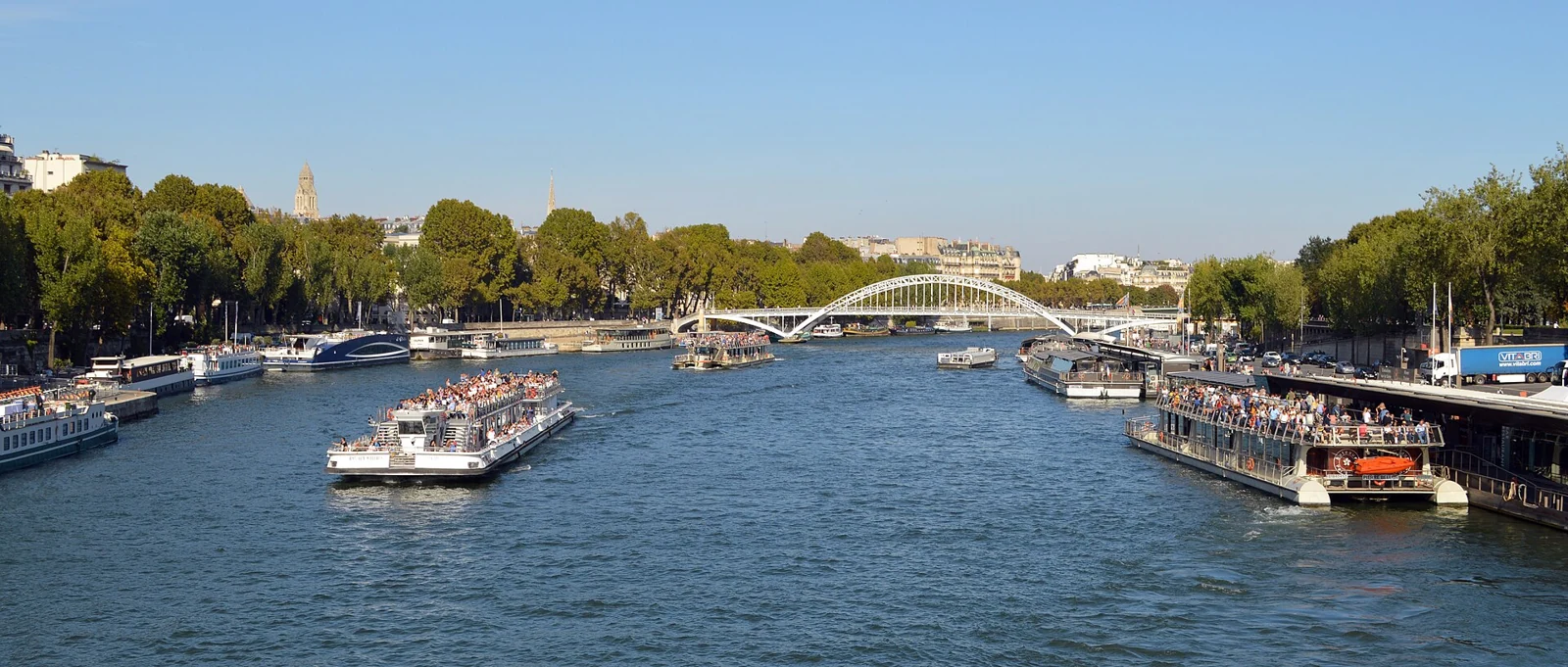
The bridge crosses both sides of the Seine around the upstream end of Île aux Cygnes. From the middle, the island promenade offers a different relationship to the water: you can walk along the river rather than across it. It is an artificial island, not one of the two historic central islands near Notre-Dame.
If conditions and access allow, continue along the island towards the Grenelle end and its Statue of Liberty replica. This is a distinct western-Paris walk. Avoid adding it automatically to an already full Eiffel Tower day; it is most enjoyable when there is time to turn back, rest and watch the boats.
A cinematic frame, not a closed set
The rows of columns and layered structure help explain the bridge's appeal to filmmakers. It is associated with Inception, among other screen appearances, but a location visit offers the real public crossing, not the controlled space of a production. Lighting, crowds and camera positions will be different.
For your own photograph, let the columns establish depth and wait somewhere that does not impede anyone. The Eiffel Tower viewpoint is another option rather than the only purpose of the visit. Looking towards the island and the river's western bend produces a less familiar account of the same place.
Combine it with the right part of Paris
The bridge joins the Passy side to Grenelle, southwest of the Eiffel Tower. A sensible outing can combine the crossing, a selected stretch of island promenade and the tower district. You do not need to include Trocadéro, the tower interior and a long museum visit in the same continuous walk.
Métro line 6 supplies an additional view of the crossing, but riding it and photographing the bridge from outside are separate experiences. Check current transport operations when planning. For anyone avoiding steps, assess the island access independently from the bridge pavement; a short route on paper is not necessarily a step-free route.
Finish on the river, with a clear boarding plan
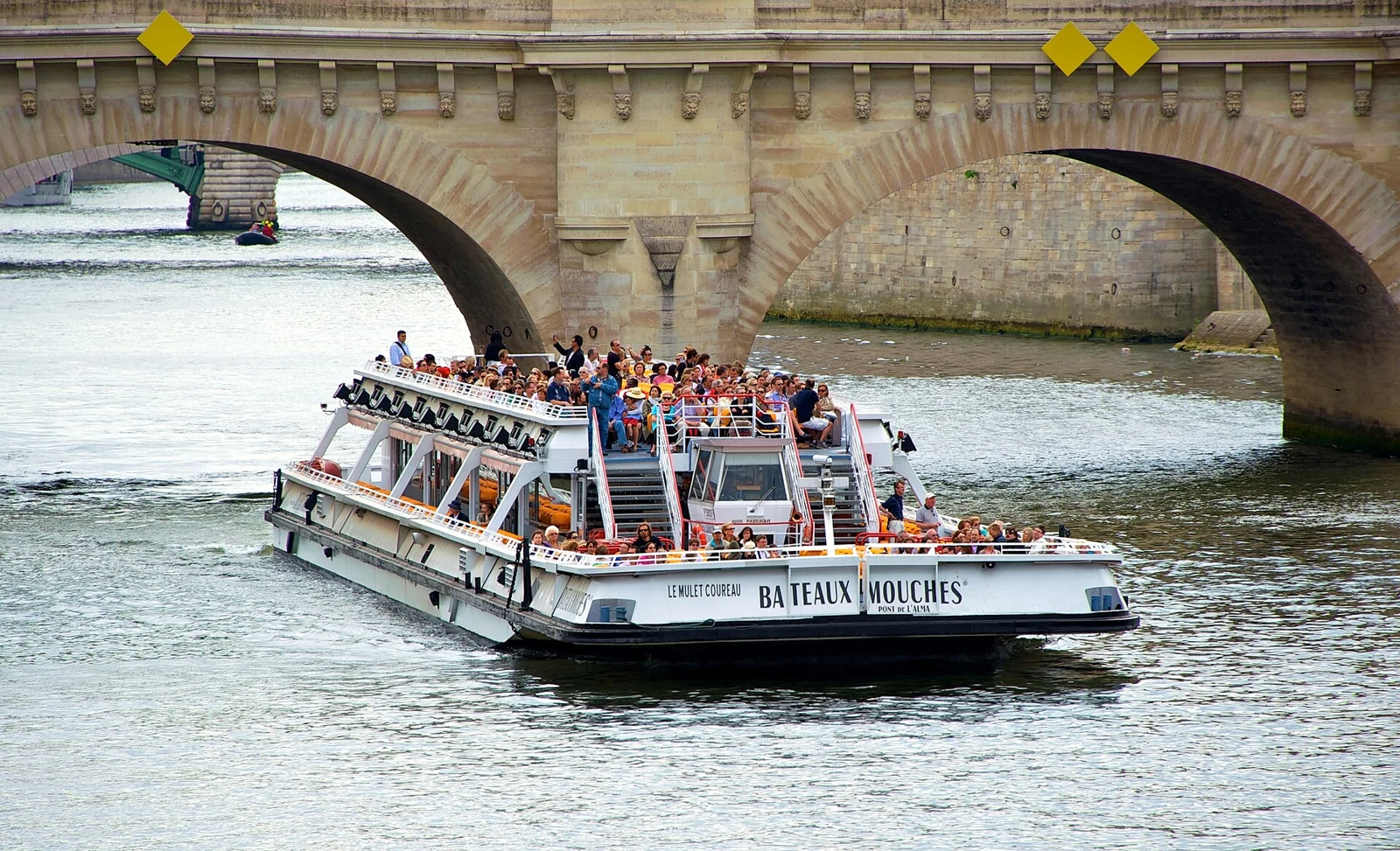
A sightseeing cruise from the Eiffel Tower district can complement this walk, provided its embarkation instructions fit your route. Bir-Hakeim itself is not a promise that your chosen boat departs underneath or turns here. Check the operator, bank, pier and required arrival time on the GetYourGuide listing.
If the main aim is the bridge's structure, a daytime sailing may be more useful than a meal served behind reflective glass. If the evening is the occasion, compare dinner options separately and leave enough time to reach their actual pier. The strongest combination gives the walk and cruise different perspectives rather than repeating a rushed tower photograph.
Your questions, answered
Does Métro line 6 cross Bir-Hakeim?
Yes. Trains use the upper level, above the lower road and pedestrian spaces.
Is Île aux Cygnes the same as Île de la Cité?
No. It is a separate artificial island in western Paris, reached from the Bir-Hakeim area.
Is the entire bridge pedestrian-only?
No. It combines transport uses. Follow the marked pedestrian space and keep photography clear of traffic and cycle routes.
Sources & editorial notes
The guide draws on city, museum, heritage, transport and operator information. Practical recommendations are our editorial judgement; follow the current official notice for date-specific access.
Some links are affiliate links. We may earn a commission if you book through them, at no additional cost to you. Prices, availability and booking terms are set by the provider.