Begin with the view across the river
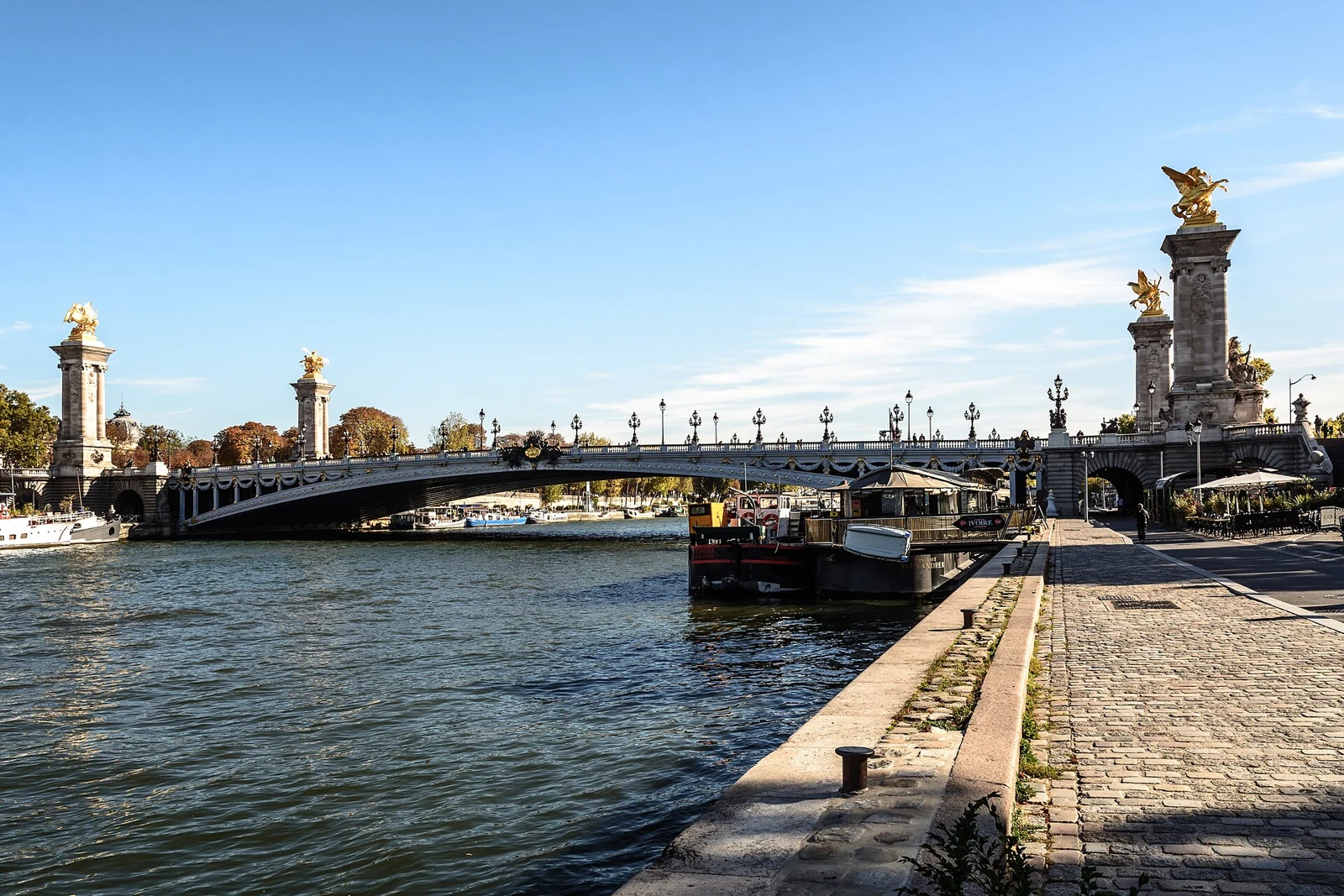
Pont Alexandre III makes a strong first impression, but its setting explains more than its ornament alone. On one side are the Grand Palais and Petit Palais; across the Seine, the avenue opens towards Invalides. Stand back before crossing and notice how the bridge joins these monumental spaces without becoming a high wall between them.
This is a useful place to compare two scales of Paris. The long architectural axis belongs to a ceremonial capital, while the quay below carries people walking, cycling and preparing to board boats. A good visit leaves time for both the grand composition and the ordinary river activity.
A bridge for an international stage
The bridge was inaugurated for the Universal Exhibition of 1900. Its name and symbolism also express the Franco-Russian alliance; Tsar Nicholas II laid the foundation stone in 1896. It should therefore be read as a diplomatic and exhibition-era monument, not a remnant of medieval Paris.
The exhibition connection continues on the Right Bank in the neighbouring palaces. Their proximity makes a coherent afternoon, although entry to an exhibition is a separate decision from visiting the bridge. Choose one interior visit if you want time to enjoy the riverfront without turning the walk into a hurried transfer.
What the gold is telling you
The four tall corner pylons make the crossing recognisable from a distance. Their gilded groups combine winged horses with figures of Fame. Closer to the water, decorative figures and lamps create a denser vocabulary of shells, movement and aquatic imagery. Look at a few details carefully instead of trying to identify every sculpture in passing.
The central decorative groups pair the Seine with the Neva, tying the river setting to the alliance behind the project. It is a useful reminder that public monuments tell political stories as well as aesthetic ones. The ornament is part of the bridge's meaning, not merely a decorative finish.
The engineering beneath the spectacle
The principal metal arch makes its crossing without an intermediate pier in the river. Its unusually low profile helped maintain the surrounding perspectives, while the substantial abutments at the banks resist the forces created by that form. The beautiful view depends on choices that are largely hidden from a casual photograph.
From a permitted lower-quay viewpoint, compare the shallow curve with the more solid appearance of neighbouring stone crossings. From the deck, look along the river rather than only towards the monuments. A boat journey adds the underside and full span to this architectural reading, subject to the route actually operated.
An unhurried walk through monumental Paris
Start around the palaces, cross towards the Invalides side and choose a stretch of public quay for a closer river view. Return at street level if steps or weather make the lower bank inconvenient. The route works as a short architectural outing; it does not require another major ticketed attraction at each end.
Photographers can seek changing light, but no sunset colour or empty foreground is guaranteed. Stay on public pavements and keep the crossing clear. A comfortable daytime visit often reveals more of the sculpture than a rushed late-night stop, while an evening walk emphasises the bridge's silhouette and illumination.
Choose a cruise by its actual pier
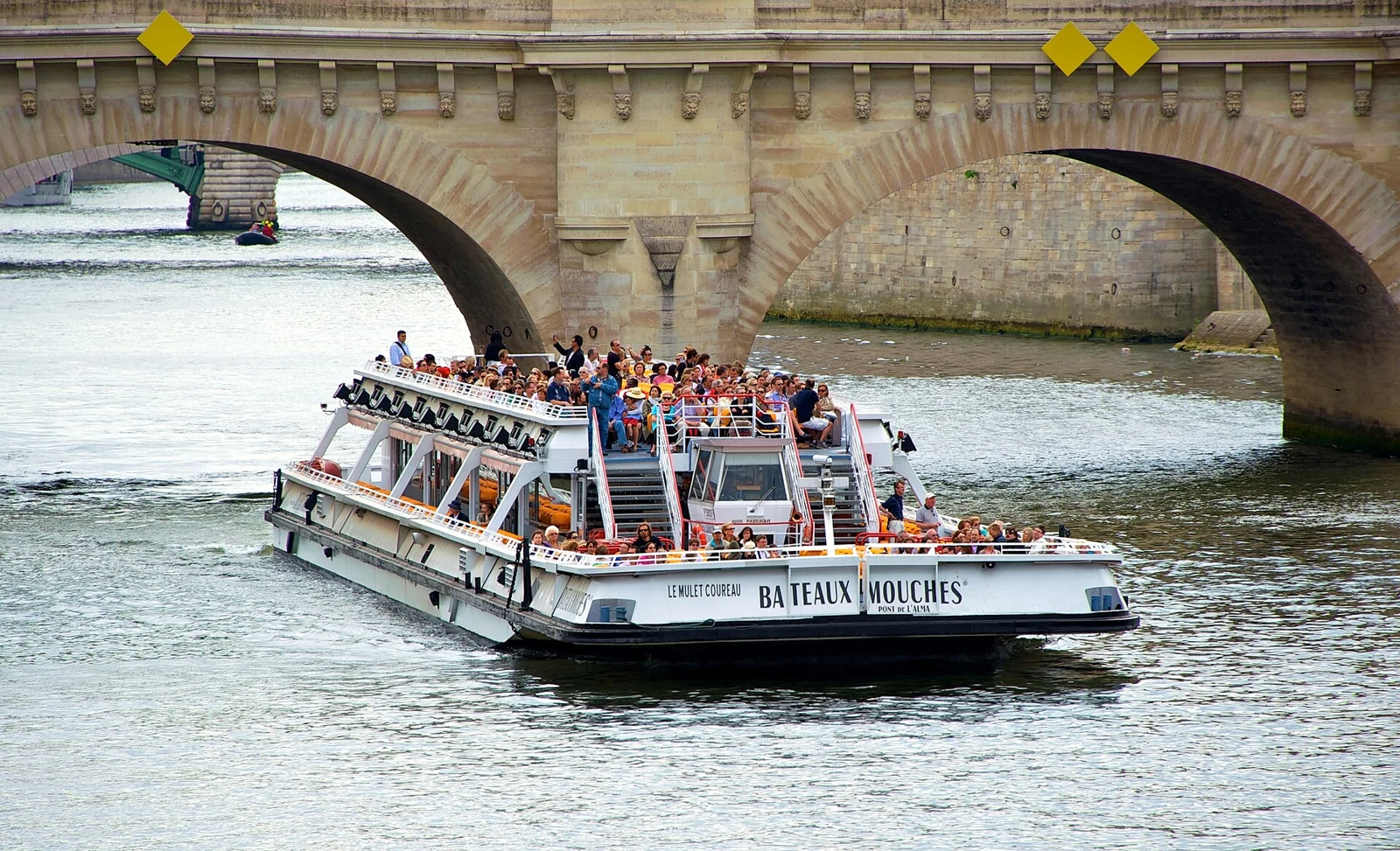
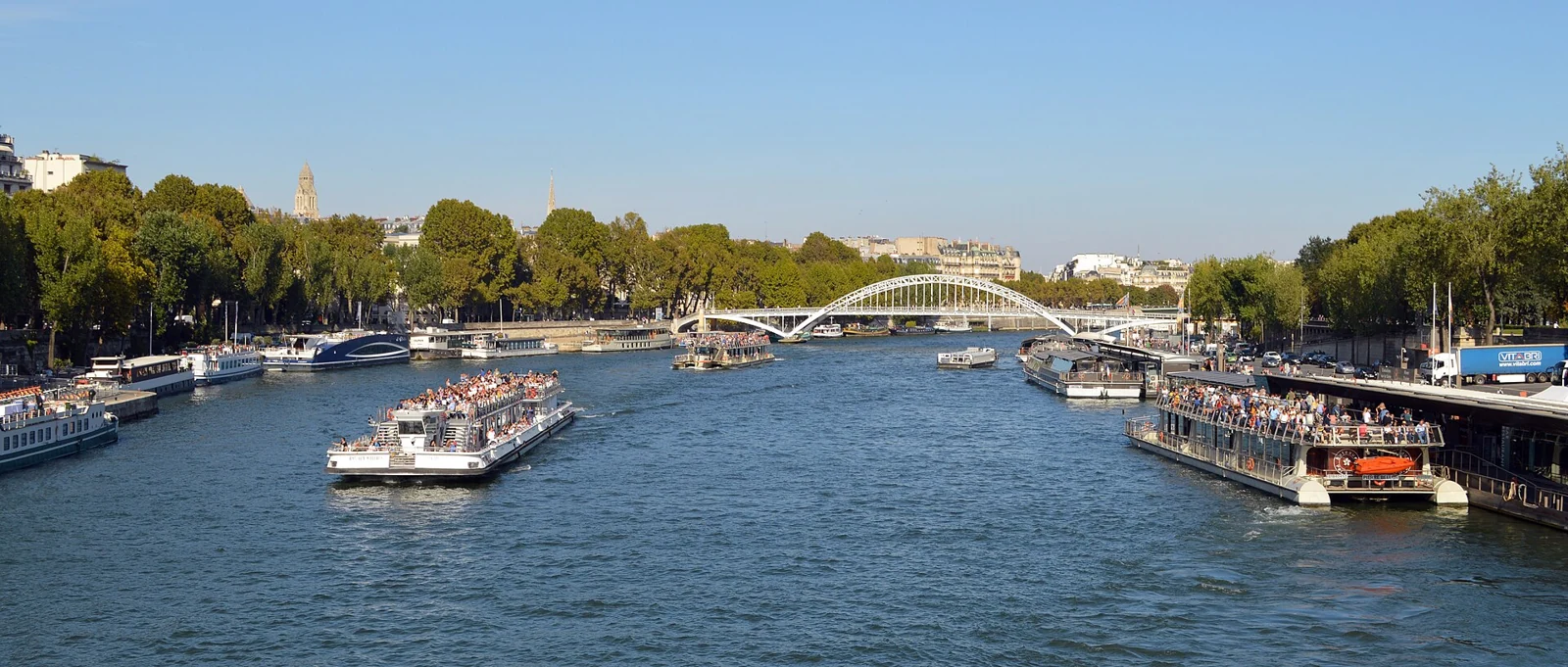
Several river departures operate in this wider district, but “near Pont Alexandre III” is not a sufficient boarding instruction. Bateaux-Mouches lists Port de la Conférence at Pont de l'Alma on the Right Bank; other experiences may use different quays. Read the precise location on the GetYourGuide product before linking the walk to a sailing.
For a dinner cruise, leave more time than for a simple sightseeing pause. You may need check-in, a specific seating category and a fixed departure. If the cruise begins elsewhere, enjoy the bridge first and travel to the correct pier with a buffer rather than treating every boat along the bank as interchangeable.
Your questions, answered
Is there a charge to visit Pont Alexandre III?
The public bridge is free to cross. Exhibitions, guided activities and cruises nearby have their own admission or booking arrangements.
Why was the bridge built?
It formed part of the setting for the 1900 Universal Exhibition and expressed the Franco-Russian alliance.
Will my cruise definitely pass underneath?
Check the advertised circuit, but river conditions and operations can change routes. Do not treat a photograph as a guaranteed itinerary.
Sources & editorial notes
The guide draws on city, museum, heritage, transport and operator information. Practical recommendations are our editorial judgement; follow the current official notice for date-specific access.
Some links are affiliate links. We may earn a commission if you book through them, at no additional cost to you. Prices, availability and booking terms are set by the provider.